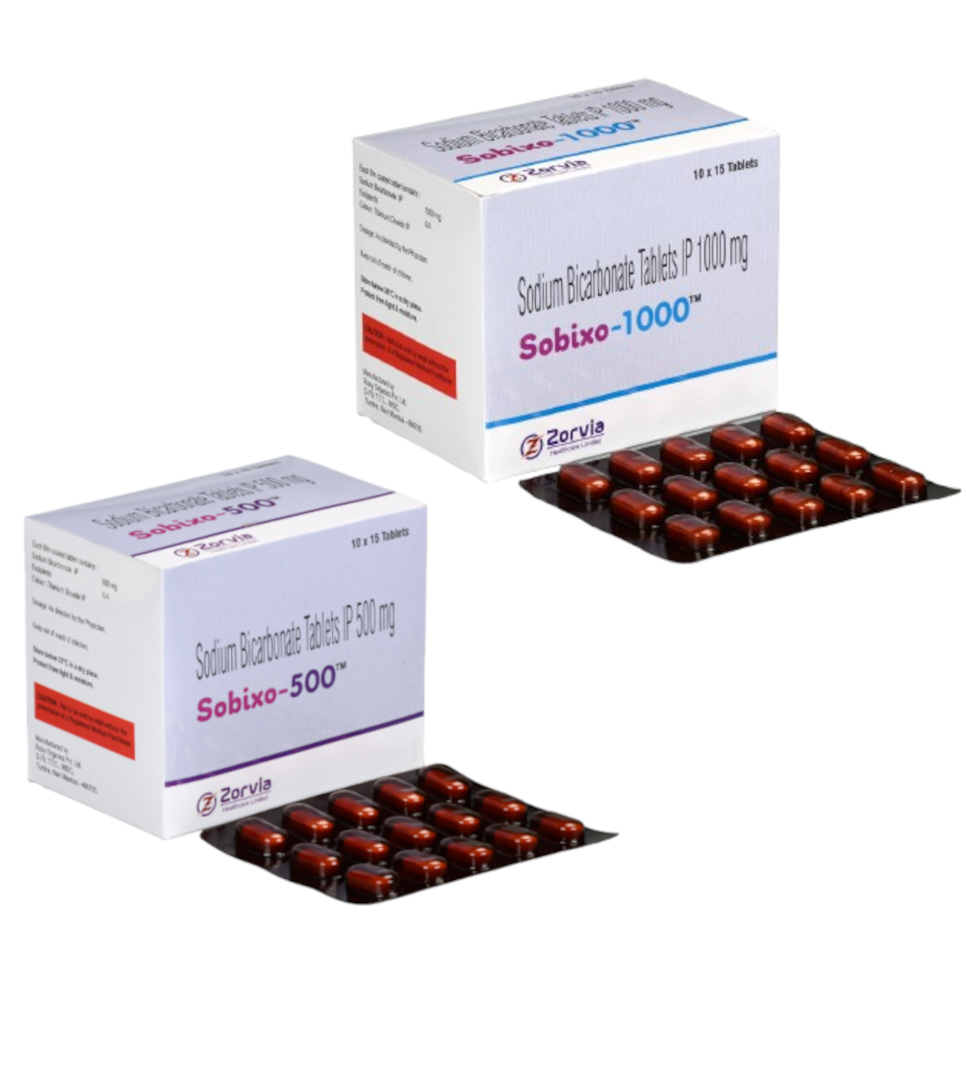
Each film coated tablet contains
Sodium Bicarbonate IP…………………………. 500 mg/1000mg
Excipients…………………………………………q.s.
Colour: Tartrazine
3. Dosage Form and Strength
Film coated tablet 500 mg/1000 mg
4. Clinical Particulars
4.1 Therapeutic Indication
For the management of metabolic acidosis which may occur in severe renal disease.
4.2 Posology and Method of Administration
Moderate metabolic acidosis: 325 to 2000 mg orally 1 to 4 times a day.
Paediatric population
Not recommended.
Method of administration
For oral administration. To be swallowed whole with a drink of water.
4.3 Contraindications
patients with hypersensitivity to sodium bicarbonate or any ingredient of the formulation.
patients with metabolic alkalosis or respiratory alkalosis, hypokalaemia, hypernatraemia, low sodium diet, hypocalcaemia, or hypochlorhydria.
children under 12 years old.
4.4 Special Warnings and Precautions for Use
Overtreatment with bicarbonate must be avoided. Frequent monitoring of serum electrolytes and acid-base status is essential. In patients with moderate and advanced chronic renal disease, the association between serum bicarbonate concentration and all-cause mortality is U-shaped. The lowest mortality rate is seen in patients with serum bicarbonate concentration in the range of 26–29 mmol/l. The highest mortality rate is observed among patients with serum bicarbonate levels of < 22 mmol/l but an increase in mortality is also seen in patients with serum bicarbonate levels of > 29 mmol/l.
Sodium bicarbonate should be given extremely cautiously to patients with heart failure, oedema, renal impairment, hypertension, eclampsia, aldosteronism, or other conditions associated with sodium retention.
Do not take if you are hypersensitive to sodium bicarbonate.
Consult your doctor or pharmacist if symptoms persist after 7 days.
This medicine can mask the symptoms of stomach cancer or ulcer.
4.5 Drug Interactions
The effects of a number of drugs may be reduced or increased by the alkalinisation of the urine (e.g. aspirin or diflunisal) and changes in gastric pH brought about by sodium bicarbonate.
In particular cases elimination of weak acids and bases may be affected by sodium hydrogen carbonate treatment via an increase of the pH in urine. This might for example apply to sympathomimetics, anticholinergics, tricyclic antidepressants, barbiturates, H2-blockers, captopril, and quinidine.
Large amounts of milk or calcium containing products should not be taken whilst taking Sodium bicarbonate tablet. Such administration may result in milk-alkali syndrome.
Sodium bicarbonate reduces the absorption of a number of other drugs taken concomitantly. These include ACE inhibitors (captopril, enalapril, and fosinapril), antibacterials and antifungals (azithromycin, cefaclor, cefpodoxime, isoniazid, itraconazole, rifampicin, tetracyclines, ketoconazole and the quinolone group of antibacterials); antivirals (atazanivir, fosamprenavir, tipranavir); antihistamines (fexofenadine); bisphosponates, corticosteroids (deflazacort); digoxin, dipyridamole, antiepileptics (gabapentin and phenytoin), ulcer healing drugs (lansoprazole); levothyroxine, mycophenolate, lipid regulating drugs (rosuvastatin); antipsychotics (sulpiride, phenothiazines), chloroquine, hydrochloroquine, and penicillamine. Antacids should be avoided with nilotinib.
Functional interactions with gluco- and mineralocorticoids, androgens and diuretics associated with increased potassium excretion may occur.
Antacids possibly reduce absorption of bile acids.
4.6 Use in special populations
Pregnancy: Animal studies are insufficient with respect to effects on pregnancy, embryonal fetal development, parturition and postnatal development. The potential risk for humans is unknown. Sodium bicarbonate should not be taken during pregnancy unless advised by a doctor to do so.
Breast-feeding: The effects of sodium administration during breast-feeding are not known. Sodium bicarbonate should not be taken if breast-feeding unless advised by a doctor to do so.
Fertility: The potential risks of sodium on fertility are not known.
4.7 Effects on Ability to Drive and Use Machines
There is no information available for effect of Sodium Bicarbonate on ability to drive and use machine.
Metabolic alkalosis, Fluid retention, Loss of appetite (continuing)
Psychiatric disorders
Not known
Mood or mental changes, Nervousness or restlessness
Vascular disorders
Not known
Hypertension, Slow breathing, Breathing difficulties, Fluid on the lungs
Nervous system disorders
Not known
Headache (continuing), Dizziness
Skin and subcutaneous tissue disorders
Not known
Swelling of feet of lower legs
Renal and urinary disorders
Not known
Frequent urge to urinate, Promotion of renal urolithiasis (formation of calcium or magnesium phosphate calculi) upon prolonged use.
General disorders and administration site conditions
Not known
Extreme irritability, unusual tiredness or weakness, muscle spasms or cramps
Reporting of Suspected Adverse Reactions
Reporting suspected adverse reactions after authorization of the medicinal product is important. It allows continued monitoring of the benefit/risk balance of the medicinal product. Healthcare professionals are asked to report any suspected adverse reactions via email to:medico@zorvia.com
By reporting side effects, you can help provide more information on the safety of this medicine.
4.9 Overdose
Excessive administration of bicarbonate may lead to hypokalaemia and metabolic alkalosis, especially in patients with impaired renal function. Symptoms include mood changes, tiredness, shortness of breath, muscle weakness and irregular heartbeat. Muscle hypertonicity, twitching and tetany may develop, especially in hypocalcaemic patients. Excessive doses of sodium salts may lead to sodium overloading and hyperosmolality.
Treatment of metabolic alkalosis and hypernatraemia is by correction of fluid and electrolyte balance. Replacement of calcium, chloride, and potassium ions may be of particular importance.
5.0 Pharmacological Properties
5.1 Mechanism of action / Pharmacodynamic properties
Sodium bicarbonate is used as an antacid in relief of the symptoms of dyspepsia, heartburn and indigestion caused by excess gastrointestinal acid. Sodium bicarbonate causes neutralisation of gastric acid with the production of carbon dioxide. Sodium bicarbonate therapy increases plasma bicarbonate, buffers excess hydrogen ion concentration, raises blood pH and reverses clinical manifestations of metabolic acidosis.
5.2 Pharmacodynamic properties
AbsorptionVitamin
Sodium bicarbonate exists as a sodium ion and bicarbonate ion within Sodium bicarbonate tablet. Once orally administered, the bicarbonate ion readily binds to hydrochloric acid in the stomach to form sodium chloride, carbon dioxide and water.
Bicarbonate ions which do not react with hydrochloric acid within the stomach are readily emptied into the duodenum via the pylorus. Bicarbonate ions are then readily absorbed through the small intestine where they enter general circulation. A linear dose dependent relationship between sodium bicarbonate supplementation and serum bicarbonate levels has been shown in CKD patients with metabolic acidosis.
Distribution
Sodium bicarbonate is present in all body fluids. Sodium bicarbonate causes neutralisation of gastric acid with the production of carbon dioxide.
The bicarbonate ion is freely soluble in the blood stream and readily crosses the blood brain barrier. The site of action of bicarbonate ions with respect to metabolic acidosis is the blood stream.
Biotransformation
The bicarbonate ion is a simple electrolyte and is therefore not hepatically metabolised but rather eliminated from the body via excretion.
Elimination
Any bicarbonate not involved in the gastric acid neutralisation reaction is absorbed. The bicarbonate ion is excreted through various bodily pathways. Firstly, sodium bicarbonate is excreted via the pulmonary system. This involves the bicarbonate ion binding with a free hydrogen ion to form carbonic acid which is then broken down into carbon dioxide and water in the presence of carbonic anhydrase and excreted through the lungs. Bicarbonate ions readily pass through the renal cortex and are eliminated via urine.
6.0 Nonclinical Properties
6.1 Animal Toxicology or Pharmacology
No known animal toxicology data.
7.0 Description
Sodium Bicarbonate belongs to a group of drugs known as antacids. Sodium Bicarbonate tablets are used to treat rapid relief of stomach acidity and heartburn due to stomach acidity.
Molecular Weight:
84.007 g/mol.
Molecular Formula: NaHCO3.
8. Pharmaceutical particulars
8.1 Incompatibilities
Not applicable
8.2 Shelf-Life
Refer on pack
8.3 Packaging Information
8.4 Storage and Handling Instructions
Keep out of reach of children.
Store below 30°C in a dry place.
Protect from light & moisture.
9.0 Patient Counselling Information
Long-term use warning
Prolonged use of Sodium Bicarbonate tablet without medical supervision may lead to electrolyte imbalance or metabolic alkalosis.
Use in elderly patients
Elderly patients may be more susceptible to sodium overload and should use this medicine cautiously under medical advice.
Risk of sodium overload
Excessive intake may increase sodium levels in the body and worsen conditions such as hypertension, oedema or congestive heart failure.
Administration advice
The tablet should preferably be taken with a full glass of water and should not be chewed or opened.
Duration of treatment
Patients should consult a healthcare professional if symptoms persist or worsen after 7 days of treatment.
Monitoring requirement
Patients receiving prolonged therapy, especially those with kidney impairment, may require monitoring of serum electrolytes and acid-base balance.
Interaction timing advice
Sodium Bicarbonate Tablet may affect the absorption of other medicines; therefore, administration of other oral medicines should generally be separated by at least 2 hours.
Dietary sodium consideration
Patients on sodium-controlled diets should consider the total daily sodium intake from this medicine along with dietary sodium sources.
Paediatric use statement
Safety and efficacy in children below 12 years of age have not been established.
Medical advice before use
Patients should seek medical advice before use if they experience unexplained weight loss, difficulty swallowing, persistent stomach pain, or gastrointestinal bleeding symptoms such as black stools or vomiting blood.