4. Clinical Particulars
4.1 Uses
- As adjunctive nutritional support in neuro-metabolic stress, muscle discomfort, sleep irregularity, chronic fatigue, sarcopenia, increased metabolic demand, and cardiometabolic stress.
- Supports mitochondrial dysfunction commonly seen in patients with Type 2 Diabetes Mellitus.
- Supports individuals with reduced daily readiness associated with stress-related neuro-metabolic strain.
- Helps address hypomagnesemia and magnesium loss.
4.2 Posology and Method of Administration
Posology
1 tablet once daily
Method of administration
The tablets should be swallowed whole with liquid.
4.3 Contraindications
Hypersensitivity to the active substance, to any of the excipients listed in the formulation.
4.4 Special Warnings and Precautions for use
While highly tolerated, taking excessively large amounts can still trigger mild digestive discomfort, nausea, or localized flushing.
4.5 Drug Interactions
Magnesium may interact with certain medications, such as oral bisphosphonates, tetracyclines, and quinolone antibiotics.
4.6 Use in Special Population
Pregnancy and breastfeeding
Maglectin tablet may be administered during pregnancy and lactation under the guidance of registered medical practitioner.
4.7 Effects on Ability to Drive and Use Machines
None anticipated.
4.8 Undesirable Effects
The undesirable effects of Maglectin may include gastrointestinal issues such as nausea, vomiting, and abdominal pain.
Reporting of Suspected Adverse Reactions
Reporting suspected adverse reactions after authorization of the medicinal product is important. It allows continued monitoring of the benefit/risk balance of the medicinal product. Healthcare professionals are asked to report any suspected adverse reactions via email to: medico@zorvia.com
By reporting side effects, you can help provide more information on the safety of this medicine.
4.9 Overdose
In case of overdose, discontinue use immediately and seek medical attention. Treatment should be symptomatic and supportive.
5.0 Pharmacological Properties
5.1 Mechanism of Action/ Pharmacodynamic Properties
Magnesium bisglycinate
Magnesium is an essential mineral and a cofactor for over 300 enzymatic systems involved in numerous metabolic processes. It is required for mitochondrial ATP synthesis and energy production, oxidative phosphorylation, protein synthesis, and the synthesis and stability of DNA and RNA. Magnesium also plays a key role in muscle and nerve function, blood glucose and blood pressure regulation, bone development, and the transport of calcium and potassium ions necessary for normal muscle contraction, nerve impulse conduction, and cardiac rhythm. Magnesium bisglycinate provides highly bioavailable magnesium along with glycine, supporting relaxation, healthy sleep, and normal neuromuscular function.
L-Carnitine Tartrate
L-carnitine L-tartrate (LCLT) supports muscles by accelerating recovery and reducing post-exercise damage. It works by moving fatty acids into the mitochondria for cellular energy (ATP), while preserving glycogen, increasing oxygen consumption efficiency during hypoxic stress, and mitigating oxidative stress within muscle tissue.
Vitamin B6 (Pyridoxine hydrochloride)
Vitamin B6, primarily in its biologically active form pyridoxal-5′-phosphate (PLP), functions as a coenzyme in more than 100 enzymatic reactions involved in amino acid metabolism, energy production, neurotransmitter synthesis, and cellular function. Owing to its central role in metabolic pathways, adequate vitamin B6 status is essential for maintaining normal skeletal muscle function and physical performance.
Vitamin D3 (Cholecalciferol)
Vitamin D3 is a fat-soluble vitamin that plays an important role in muscle health, immune function, and neuromuscular coordination. Although traditionally associated with bone health, vitamin D3 also has significant effects on muscle strength and cellular function.
Rationale for Maglectin combination
Maglectin is synergistic mitochondrial support rather than high-dose carnitine therapy. Each component complements the action of the others in the mitochondrial energy pathway. As a result, the formulation is designed to achieve effective mitochondrial and metabolic support through nutrient synergy, where the required dose of individual ingredients may be lower than when used as standalone supplementation, while still providing comprehensive support for cellular energy production.
5.2 Pharmacokinetic Properties
Magnesium bisglycinate
Magnesium bisglycinate is absorbed intact via the dipeptide channels into the mucosal cells of the intestine and is subsequently hydrolysed into its magnesium and glycine components. The bioavailability of magnesium bisglycinate is 66.66%. The magnesium component of magnesium bisglycinate would then be handled systemically like any other source of magnesium. Magnesium bisglycinate also provides the amino acid glycine which might have additional amino acid benefits that all other organic acids or anions used for other magnesium components do not have.
L-Carnitine Tartrate
L-Carnitine is absorbed from the gastrointestinal tract by active and passive transport; the bioavailability of oral supplements is approximately 14–18%. It is distributed mainly to skeletal muscle, with smaller amounts distributed to the liver, kidneys, and other tissues. L-Carnitine is efficiently reabsorbed by the kidneys (90–99% of the filtered load), although reabsorption decreases at higher circulating concentrations, resulting in increased renal clearance.
Vitamin B6 (Pyridoxine hydrochloride)
Vitamin B6 is absorbed into the jejunum of the small intestine through a carrier-mediated process. Absorbed Pyridoxine (PN) is converted to pyridoxine 5′-phosphate (PNP) by the enzyme pyridoxal kinase, and PNP is further converted to Pyridoxal 5′-phosphate (PLP) by the enzyme pyridoxal oxidase. PLP is the predominant form in the plasma, accounting for about 70–80% of the total vitamin B6. Pyridoxine is excreted in the urine as 4-pyridoxic acid.
Vitamin D3 (Cholecalciferol)
Vitamin D3 (Cholecalciferol) is well absorbed from the gastrointestinal tract, with bile essential for adequate absorption. It circulates in the blood bound to a specific alpha-globulin and is stored in adipose and muscle tissues for gradual release. Cholecalciferol is converted in the liver to 25-hydroxycholecalciferol and subsequently in the kidneys to the active metabolite, 1,25-dihydroxycholecalciferol, which increases calcium absorption. Vitamin D compounds and their metabolites are excreted mainly in the bile and faeces, with only small amounts appearing in the urine. Certain vitamin D substances may also be distributed into breast milk.
6.0 Nonclinical Properties
6.1 Animal Toxicology or Pharmacology
No known animal toxicology data
7.0 Description
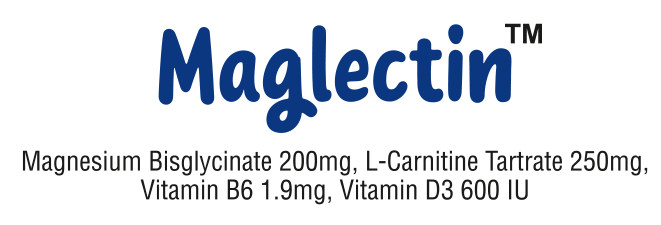
Maglectin Tablet is a nutritional supplement containing Magnesium (as Magnesium Bisglycinate), L-Carnitine Tartrate, Vitamin B6 (Pyridoxine Hydrochloride), and Vitamin D3 (Cholecalciferol).
8.0 Pharmaceutical Particulars
8.1 Incompatibilities
Not applicable
8.2 Shelf-Life
Refer on pack
8.3 Packaging Information
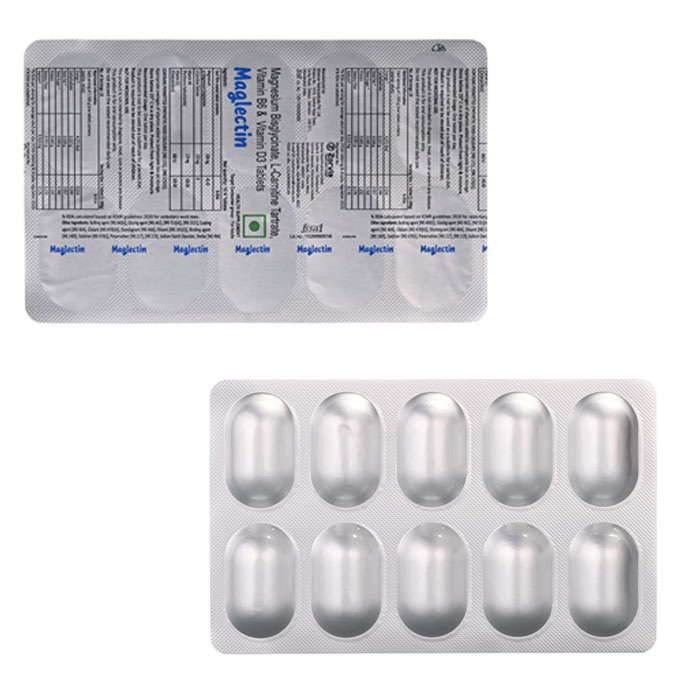
10 Tablets Strip
8.4 Storage and Handling Instructions
Store below 25°C in a dry place. Protect from light and moisture.
Product is required to be stored out of reach of children.
9.0 Patient Counselling Information
- Take one tablet once daily or as directed by your physician. Swallow the tablet whole with water.
- Do not exceed the stated recommended daily use.
- Tell your doctor if you are taking oral bisphosphonates, tetracycline antibiotics, or quinolone antibiotics, as magnesium may interact with these medicines.
- Mild gastrointestinal symptoms such as nausea, vomiting, abdominal pain, or digestive discomfort may occur. Consult your doctor if these persist or become severe.
- In case of an allergic reaction (such as rash, itching, swelling, or difficulty breathing), discontinue use and seek immediate medical attention.
- In case of accidental overdose, discontinue use immediately and seek medical attention. Treatment should be symptomatic and supportive.
- This product is not intended to diagnose, treat, cure or prevent any disease.
- This product is for oral consumption only.