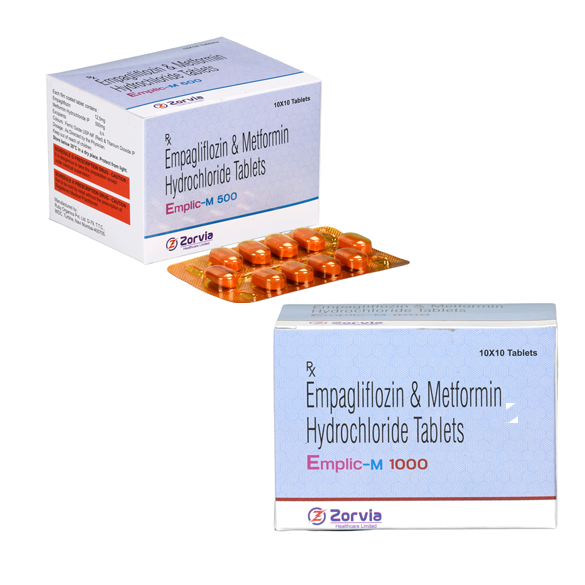
Read all of this leaflet carefully before you start giving this medicine.
Keep this leaflet. You may need to read it again.
If you have any further questions, ask your doctor, healthcare provider or pharmacist.
This medicine has been prescribed for your child. Do not pass it on to others. It may harm them, even if their symptoms are the same.
If your child gets side effects and they become serious, or if you notice any side effects not in this leaflet, please tell your doctor, healthcare provider or pharmacist.
What is in this leaflet
What Emplic – M 500/1000 tablet is and what it is used for
What you need to know before you take Emplic – M 500/1000 tablet
How to take Emplic – M 500/1000 tablet
Possible side effects
How to store Emplic – M 500/1000 tablet
Contents of pack and other information
1. What Emplic – M 500/1000 tablet is and what it is used for
Emplic – M 500/1000 contains two active ingredients:
Empagliflozin
Metformin
Emplic – M 500/1000 is used to treat type 2 diabetes mellitus in adults, along with diet and exercise, to help lower blood sugar levels.
How this medicine works
This medicine works in two ways to control your blood sugar:
Empagliflozin helps your kidneys remove excess sugar from your body through urine
Metformin reduces the amount of sugar made by your liver and helps your body use insulin more effectively
Together, they help improve blood sugar control.
2. What you need to know before you take Emplic – M 500/1000 tablet
Do not take Emplic–M 500/1000 tablet if you:
Are allergic to empagliflozin, metformin, or any of the other ingredients of this medicine
Have severe kidney problems
Have metabolic acidosis (such as lactic acidosis or diabetic ketoacidosis)
Are in diabetic pre-coma
Have conditions that may affect kidney function such as severe dehydration, serious infection, or shock
Have conditions causing low oxygen in the body (such as severe heart failure, breathing problems, or recent heart attack)
Have liver problems
Drink excessive alcohol or have alcohol dependence
Warnings and precautions
Talk to your doctor before taking this medicine if you:
Have type 1 diabetes (this medicine is not recommended)
Have kidney problems or are elderly (your doctor will monitor your kidney function regularly)
Are at risk of dehydration (e.g. vomiting, diarrhoea, fever, or low fluid intake)
Have a history of pancreas problems, reduced food intake, or alcohol abuse
Are taking medicines that may affect kidney function (e.g. diuretics, blood pressure medicines, NSAIDs)
Serious conditions to be aware of
Lactic acidosis (rare but serious)
This can occur especially if your kidneys are not working properly. Stop taking this medicine and contact a doctor immediately if you have:
Fast or difficult breathing
Stomach pain
Muscle cramps
Severe weakness or feeling very unwell
Diabetic ketoacidosis (serious condition)
This may occur even if blood sugar is not very high. Symptoms include:
Nausea or vomiting
Abdominal pain
Excessive thirst
Difficulty breathing
Confusion or unusual tiredness
If these occur, seek medical help immediately.
Kidney function
Your doctor will check your kidney function before and during treatment
This medicine should not be used in severe kidney impairment
Surgery or medical procedures
You may need to stop this medicine temporarily before surgery or certain scans (using contrast dye)
Restart only when your doctor advises
Risk of dehydration (fluid loss)
This medicine may increase urination and lower blood pressure
Drink enough fluids, especially during illness
Infections
This medicine may increase the risk of urinary tract infections and genital infections
Rarely, a serious infection of the genital area (Fournier’s gangrene) may occur
Foot care
Maintain proper foot care
Contact your doctor if you notice sores, ulcers, or infections
Vitamin B12 levels
Long-term use may reduce vitamin B12 levels
Your doctor may monitor this
Other medicines and Emplic–M 500/1000
Tell your doctor if you are taking:
Diuretics (water tablets)
Insulin or other diabetes medicines
Medicines affecting kidney function
Steroids, thyroid medicines, or oral contraceptives
Alcohol (avoid excessive intake)
Pregnancy and breast-feeding
Do not take this medicine if you are pregnant or planning to become pregnant
Do not use while breastfeeding
Driving and using machines
This medicine has little effect on driving
Be careful if you experience low blood sugar, especially when used with insulin or similar medicines
Tests and monitoring
Your urine may test positive for sugar (this is expected)
Regular blood tests may be required to monitor kidney function and vitamin B12
3. How to take Emplic – M 500/1000 tablet?
Always take this medicine exactly as your doctor has told you. Check with your doctor or pharmacist if you are not sure.
The recommended dose is one tablet twice a day.
If you have reduced kidney function, your doctor may prescribe a lower dose or decide to use an alternative medicine.
Taking this medicine
Swallow the tablet whole with water.
Take the tablets with meals to lower your chance of an upset stomach.
Take the tablet twice daily by mouth.
Your doctor may prescribe Emplic – M 500/1000 together with another diabetes medicine. Remember to take all medicines as directed by your doctor to achieve the best results for your health. Your doctor may need to adjust your doses to control your blood sugar.
Appropriate diet and exercise help your body use its blood sugar better. It is important to stay on the diet and exercise program recommended by your doctor while taking Emplic – M 500/1000.
If you take more Emplic – M 500/1000 than you should
If you take more Emplic – M 500/1000 tablets than you should have, you may experience lactic acidosis. Symptoms of lactic acidosis are non-specific such as feeling or being very sick, vomiting, stomach ache with muscle cramps, a general feeling of not being well with severe tiredness, and difficulty in breathing. Further symptoms are reduced body temperature and heartbeat. If this happens to you, you may need immediate hospital treatment, as lactic acidosis can lead to coma. Stop taking this medicine immediately and contact a doctor or the nearest hospital straight away. Take the medicine pack with you.
If you forget to take Emplic – M 500/1000
If you miss a dose, take it as soon as you remember. If you do not remember until it is time for your next dose, skip the missed dose and go back to your regular schedule. Do not take a double dose of this medicine.
If you stop taking Emplic – M 500/1000
Do not stop taking Emplic – M 500/1000 without first consulting your doctor, unless you suspect you have diabetic ketoacidosis, lactic acidosis, or if you have a condition that may be associated with dehydration. Your blood sugar levels may increase when you stop taking Emplic – M 500/1000.
If you have any further questions on the use of this medicine, ask your doctor, pharmacist or nurse.
4. Possible side effects
Like all medicines, this medicine can cause side effects, although not everybody gets them.
Very common side effects
Low blood sugar (hypoglycaemia) when used with certain diabetes medicines (such as sulphonylureas or insulin)
Digestive problems (such as nausea, vomiting, or diarrhoea)
Common side effects
Genital infections (such as vaginal yeast infection, inflammation, or infection of the penis)
Urinary tract infections (including kidney infection or severe infection)
Increased thirst
Taste changes
Constipation
Increased urination
Increased blood fats (lipids)
Uncommon side effects
Vitamin B12 deficiency
Loss of body fluids (volume depletion, which may cause dizziness or low blood pressure)
Itching (pruritus)
Rash
Pain or burning when passing urine (dysuria)
Changes in kidney function (increased creatinine or decreased kidney filtration rate)
Rare side effects
Diabetic ketoacidosis (serious condition with symptoms such as nausea, vomiting, abdominal pain, and difficulty breathing)
Severe allergic reactions (such as hives or swelling of the face, lips, or throat)