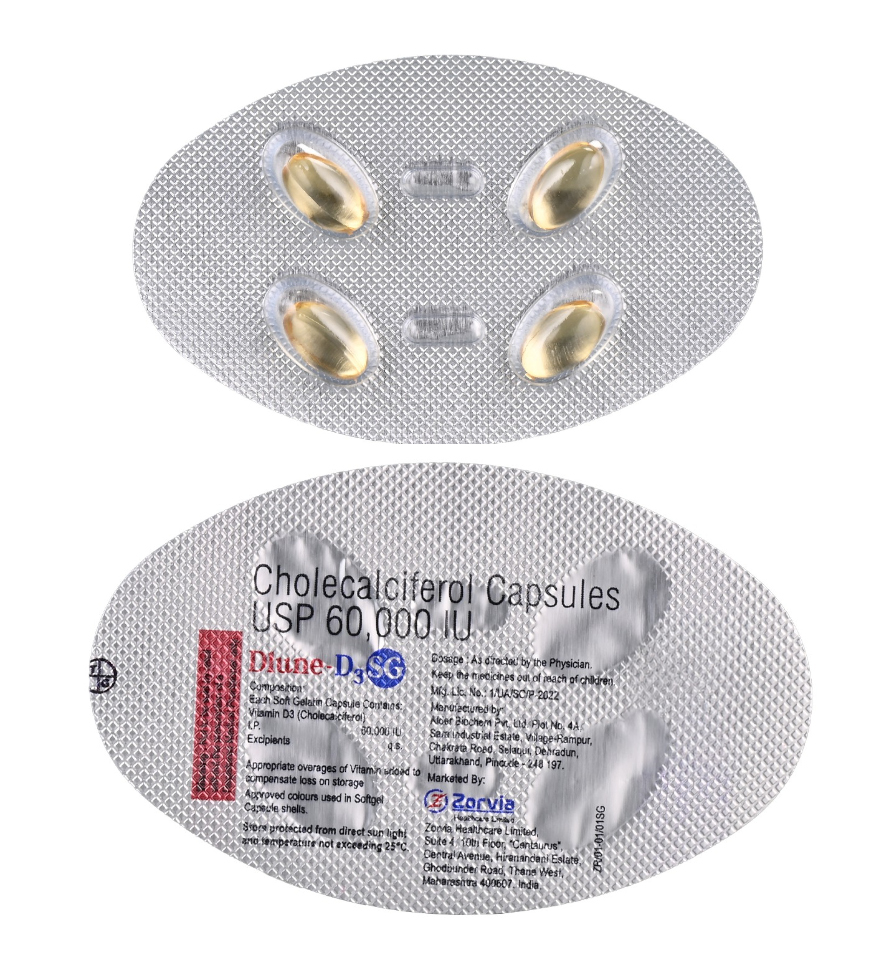
1. What Dlune-D3™ SG is and what it is used for?
Dlune-D3™ SG contains the active ingredient cholecalciferol (vitamin D3).
Vitamin D3 is found in certain foods and is also produced by the body when the skin is exposed to sunlight. It helps the body absorb calcium and phosphate, supports bone mineralization, and is essential for maintaining healthy bones and muscles.
Vitamin D deficiency is a major cause of:
- Rickets in children (defective mineralization of bones)
- Osteomalacia in adults (inadequate mineralization of bones)
Dlune-D3™ SG is used for:
-
Treatment and prevention of vitamin D deficiency states
-
Certain individuals may be at higher risk of vitamin D deficiency, including:
- Institutionalized, hospitalized, or immobile individuals
- Dark-skinned individuals
- Individuals with limited effective sun exposure
- Obese individuals
- Patients being evaluated for osteoporosis
- Patients taking medicines such as anticonvulsants or glucocorticoids
- Patients with malabsorption states, including inflammatory bowel disease or coeliac disease
- Patients recently treated for vitamin D deficiency who require maintenance therapy
2. What you need to know before you use Dlune-D3™ SG
Do not use Dlune-D3™ SG if you:
- Are allergic to cholecalciferol, ergocalciferol, vitamin D metabolites (e.g., calcitriol, calcifediol, alfacalcidol, calcipotriol), or any of the other ingredients of this medicine
- Have high levels of calcium in your blood (hypercalcaemia) or urine (hypercalciuria)
- Have kidney stones (nephrolithiasis / renal calculi)
- Have hypervitaminosis D
- Have diseases or conditions associated with hypercalcaemia, such as:
- Nephrocalcinosis
- Myeloma
- Bone metastases
- Primary hyperparathyroidism
- Sarcoidosis
- Prolonged immobilization associated with hypercalcaemia
Warnings and precautions
Talk to your doctor or pharmacist before taking Dlune-D3™ SG if you:
- Have sarcoidosis
- Have kidney disease, renal impairment, or a tendency to form renal stones
- Are receiving cardiac glycosides (e.g., digoxin)
- Are taking diuretics, especially thiazide diuretics
- Have cardiac disease (e.g., arteriosclerosis)
- Have hyperlipidemia
- Are taking other medicines or supplements containing vitamin D or calcium
- Are on long-term treatment with vitamin D
- Are a child or adolescent (medical supervision is recommended)
Monitoring during treatment
Your doctor may advise monitoring of:
- Serum calcium
- Urinary calcium
- Renal function (including serum creatinine)
- Serum phosphate, especially in patients with compromised calcium metabolism
Special caution
- In sarcoidosis, vitamin D may be converted more readily to its active form, increasing the risk of hypercalcaemia.
- In renal impairment, calcium and phosphate levels should be monitored and the risk of soft tissue / ectopic calcification should be considered.
- In severe renal insufficiency, cholecalciferol may not be adequately metabolized; alternative forms of vitamin D may be required.
- If hypercalciuria or renal impairment develops, the dose may need to be reduced or treatment discontinued.
Children and adolescents
- Medical supervision is recommended in children.
- If you are considering use in children, consult your doctor before use.
Other medicines and Dlune-D3™ SG
Tell your doctor or pharmacist if you are taking, have recently taken, or might take any other medicines.
This is especially important if you are taking:
- Thiazide diuretics, as they may reduce urinary calcium excretion and increase the risk of hypercalcaemia
- Cardiac glycosides / digitalis, as excessive vitamin D may increase the risk of digitalis toxicity and serious arrhythmias; ECG and serum calcium monitoring may be required
- Phenytoin or barbiturates, which may reduce the effect of vitamin D by increasing its metabolism
- Vitamin D analogues, which are not recommended due to additive effects and increased risk of toxicity
- Glucocorticoids, which may reduce calcium absorption and decrease the effect of vitamin D
- Cholestyramine, other ion-exchange resins, or paraffin oil, which may reduce the gastrointestinal absorption of vitamin D
- Ketoconazole, whose absorption and efficacy may be reduced by concomitant use
- Rifampicin, which may reduce the effect of vitamin D3 by increasing its metabolism
If you are taking medicines that may interfere with absorption, your doctor may advise keeping the maximum possible interval between doses.
Dlune-D3™ SG with food and drink
This medicine should preferably be taken with or after food to help improve absorption.
Pregnancy and breast-feeding
If you are pregnant or breast-feeding, think you may be pregnant, or are planning to have a baby, ask your doctor or pharmacist for advice before taking this medicine.
Pregnancy
- This product should be used during pregnancy only in cases of vitamin D deficiency.
- It is not recommended during pregnancy in patients without vitamin D deficiency.
- High doses of vitamin D may be harmful if taken in excess.
Breast-feeding
- Vitamin D can be used during breast-feeding.
- Vitamin D3 passes into breast milk.
- This should be considered if the infant is also receiving additional vitamin D supplementation.
Driving and using machines
Dlune-D3™ SG has no influence on the ability to drive and use machines.
3. How to use Dlune-D3™ SG ?
Always take this medicine exactly as your doctor or pharmacist has told you. Check with your doctor or pharmacist if you are not sure.
This medicine is taken orally.
The capsule should be swallowed whole (e.g., with water)
Do not open, chew, or crush capsule
Preferably take it with or after a meal
Recommended dose
- Vitamin D3 60,000 IU once weekly for 8 weeks, followed by one Dlune-D3 SG Capsules (60,000 IU) once a month or a maintenance daily dose as directed by the physician
Your doctor may adjust the dose depending on your clinical condition and response to treatment.
If you take more Dlune-D3™ SG than you should
The most serious consequence of overdose is hypercalcaemiadue to vitamin D toxicity.
Symptoms of overdose may include:
Nausea
Vomiting
Loss of appetite
Constipation
Excessive thirst
Increased urination
Weakness
Apathy
Dehydration
Chronic overdose may lead to:
Kidney stones / nephrocalcinosis
Vascular and soft tissue calcification
ECG changes / arrhythmias
Kidney failure
If you take more than prescribed:
Stop taking the medicine
Contact your doctor immediately
If necessary, go to the nearest hospital and take the medicine pack with you
If you forget to take Dlune-D3™ SG
- Take the missed dose as soon as you remember
- If it is almost time for your next dose, skip the missed dose
- Take the next dose at the usual time
- Do not take a double dose to make up for a forgotten dose
If you have any further questions on the use of this medicine, ask your doctor or pharmacist.
4. Possible side effects
Like all medicines, this medicine can cause side effects, although not everybody gets them.
Possible side effects may include:
- Nausea
- Vomiting
- Constipation
- Dry mouth
- Metallic taste
- Increased thirst or urination
- Headache
- Lethargy / sluggishness
- Muscle or bone pain
- Confusion or mental / mood changes
Rare
Pruritus (itching)
Rash
Urticaria (hives)
Serious allergic reactions such as:
- Swelling of face / tongue / throat
- Dizziness
- Difficulty breathing
Prolonged use may lead to
- Hypercalcaemia
- Hypercalciuria
- Hyperphosphataemia
Tell your doctor if any side effects become serious or if you notice any side effects not listed in this leaflet.
Reporting of suspected adverse reactions
Reporting suspected adverse reactions after authorization of the medicinal product is important. It allows continued monitoring of the benefit/risk balance of the medicinal product.
Healthcare professionals are asked to report any suspected adverse reactions via email to: medico@zorvia.com
By reporting side effects, you can help provide more information on the safety of this medicine.