To be sold on retail on prescription of a Registered Medical Practitioner only.
Prescribing Information
1.0 Generic Name
Chlorpheniramine Maleate Syrup 2mg
2.0 Qualitative and Quantitative Composition
Each 5 ml contains
Chlorpheniramine Maleate IP ...... 2 mg
Excipients .................................. QS
Flavoured syrupy base
3.0 Dosage Form and Strength
Dosage form - Syrup
Dosage Strength – 2 mg/5 ml For Pediatric Use Only.
4.0 Clinical Particulars
4.1 Therapeutic Indications
Decokit Syrup is indicated for symptomatic control of all allergic conditions responsive to antihistamines, including allergic rhinitis (hay fever), vasomotor rhinitis, urticaria, angioneurotic oedema, food allergy, drug and serum reactions, insect bites.
Also indicated for the symptomatic relief of itch associated with chickenpox.
4.2 Posology and Method of Administration
Oral administration only
Do not exceed the stated dose or frequency of dosing
The minimum interval between the doses should be 4 hours.
Do not use continuously for more than two weeks without consulting a doctor.
Children aged 6 - 12 years: 5ml (2mg) every 4 to 6 hourly. Maximum daily dose: 30ml (12mg) in any 24 hours.
Children aged 2 - 6 years: 2.5ml (1mg) every 4 to 6 hourly. Maximum daily dose: 15ml (6mg) in any 24 hours.
Children aged 1 - 2 years: 2.5ml (1mg) twice daily. Maximum daily dose: 5ml (2mg) in any 24 hours.
Not recommended for children below 1 year
4.3 Contraindications
Decokit Syrup is contra-indicated in patients who are hypersensitive to antihistamines or to any of the syrup ingredients.
The anticholinergic properties of chlorphenamine are intensified by monoamine oxidase inhibitors (MAOIs). Decokit Syrup is therefore contra-indicated in patients who have been treated with MAOIs within the last fourteen days.
4.4 Special Warnings and Precautions for use
Chlorphenamine, in common with other drugs having anticholinergic effects, should be used with caution in epilepsy; raised intra-ocular pressure including glaucoma; prostatic hypertrophy; severe hypertension or cardiovascular disease; bronchitis, bronchiectasis and asthma; hepatic impairment; renal impairment. Children and the elderly are more likely to experience the neurological anticholinergic effects and paradoxical excitation (e.g. Increased energy, restlessness, nervousness). Avoid use in elderly patients with confusion.
The anticholinergic properties of chlorphenamine may cause drowsiness, dizziness, blurred vision and psychomotor impairment in some patients which may seriously affect ability to drive and use machinery.
The effects of alcohol may increase and therefore concurrent use should be avoided.
Should not be used with other antihistamine containing products, including antihistamine containing cough and cold medicines.
Concurrent use with drugs which cause sedation such as anxiolytics and hypnotics may cause an increase in sedative effects, therefore medical advice should be sought before taking chlorphenamine concurrently with these medicines.
Keep out of the reach and sight of children.
4.5 Drug Interactions
Concurrent use of chlorphenamine and hypnotics or anxiolytics may cause an increase in sedative effects, concurrent use of alcohol may have a similar effect therefore medical advice should be sought before taking chlorphenamine concurrently with these medicines.
Chlorphenamine inhibits phenytoin metabolism and can lead to phenytoin toxicity.
The anticholinergic effects of chlorphenamine are intensified by MAOIs.
4.6 Use in Special Population
Pregnancy
There are no adequate data from the use of chlorphenamine in pregnant women. The potential risk for humans is unknown, Use during the third trimester may result in reactions in the newborn or premature neonates. Not to be used during pregnancy unless considered essential by a physician.
Lactation
Chlorphenamine maleate and other antihistamines may inhibit lactation and may be secreted in breast milk. Not to be used during lactation unless considered essential by a physician.
4.7 Effects on Ability to Drive and Use Machines
The anticholinergic properties of chlorphenamine may cause drowsiness, dizziness, blurred vision and psychomotor impairment, which can seriously hamper the patients' ability to drive and use machinery.
4.8 Undesirable Effects
The following convention has been utilised for the classification of the frequency of adverse reactions: very common (>1/10), common (>1/100 to <1/10), uncommon (>1/1000 to <1/100), rare (>1/10,000 to <1/1000) and very rare (<1/10,000), not known (cannot be estimated from available data).
Adverse reactions identified during post-marketing use with chlorphenamine are listed below. As these reactions are reported voluntarily from a population of uncertain size, the frequency of some reactions is unknown but likely to be rare or very rare:
System Organ Class
Adverse Reaction
Frequency
Nervous system disorders*
Sedation, somnolence
Very common
Nervous system disorders*
Disturbance in attention, abnormal coordination, dizziness, headache
General disorders and administration site conditions
Fatigue
Common
General disorders and administration site conditions
Chest tightness
Unknown
*Children and the elderly are more susceptible to neurological anticholinergic effects and paradoxical excitation (e.g. increased energy, restlessness, nervousness)
Reporting of Suspected Adverse Reactions
Reporting suspected adverse reactions after authorization of the medicinal product is important. It allows continued monitoring of the benefit/risk balance of the medicinal product. Healthcare professionals are asked to report any suspected adverse reactions via email to: medico@zorvia.com
By reporting side effects, you can help provide more information on the safety of this medicine.
4.9 Overdose
Symptoms and signs
The estimated lethal dose of chlorphenamine is 25 to 50mg/kg body weight. Symptoms and signs include sedation, paradoxical excitation of the CNS, toxic psychosis, convulsions, apnoea, anticholinergic effects, dystonic reactions and cardiovascular collapse including arrhythmias.
Treatment
Management should be as clinically indicated or as recommended by the national poisons centres where available. Symptomatic and supportive measures should be provided with special attention to cardiac, respiratory, renal and hepatic functions and fluid and electrolyte balance. If overdosage is by the oral route, treatment with activated charcoal should be considered provided there are no contraindications for use and the overdose has been taken recently (treatment is most effective if given within an hour of ingestion). Treat hypotension and arrhythmias vigorously. CNS convulsions may be treated with i.v. diazepam. Haemoperfusion may be used in severe cases.
5.0 Pharmacological Properties
5.1 Mechanism of Action
Chlorpheniramine is a first-generation antihistamine that acts as a competitive, selective inhibitor of histamine H1 receptors. By binding to these receptors, it prevents endogenous histamine from causing allergic reactions, such as smooth muscle contraction, increased capillary permeability, and itching.
5.2 Pharmacodynamic Properties
ATC Code R06AB02
Chlorphenamine is a potent antihistamine (H1-antagonist).
Antihistamines diminish or abolish the actions of histamine in the body by competative reversible blockade of histamine H1-receptor sites on tissues. Chlorphenamine also has anticholinergic activity.
Antihistamines act to prevent the release of histamine, prostaglandins and leukotrines and have been shown to prevent the migration of inflammatory mediators. The actions of chlorphenmine include inhibition of histamine on smooth muscle, capillary permeability and hence reduction of oedema and wheal in hypersensitivity reactions such as allergy and anaphylaxis.
5.3 Pharmacokinetic Properties
Chlorphenamine is well absorbed from the gastro-intestinal tract, following oral administration. The effects develop within 30 minutes, are maximal within I to 2 hours and last 4 to 6 hours. The plasma half-life has been estimated to be 12 to 15 hours.
Chlorphenamine is metabolised to the monodesmethyl and didesmethyl derivatives. About 22% of an oral dose is excreted unchanged in the urine.
6.0 Nonclinical Properties
6.1 Animal Toxicology or Pharmacology
No additional data of relevance.
7.0 Description
Chlorpheniramine Maleate is a synthetic alkylamine derivative used in allergic reactions, hay fever, rhinitis, and urticaria. Chlorpheniramine Maleate acts as a competitive histamine H1 receptor antagonist and displays anticholinergic and mild sedative effects as well.
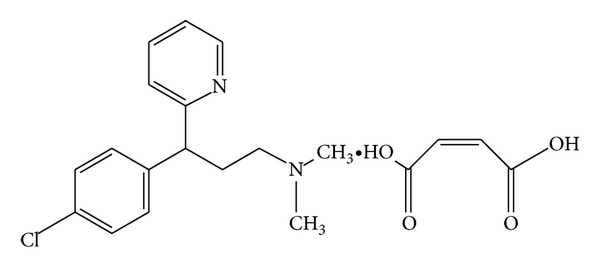
Its structural formula is
Chlorpheniramine Maleate structure
Molecular Formula: C₁₆H₁ClN₂ · C₄H₄O₄
Molecular Weight:390.9 g/mol
8.0 Pharmaceutical Particulars
8.1 Incompatibilities
None known
8.2 Shelf-Life
Refer on pack
8.3 Packaging Information
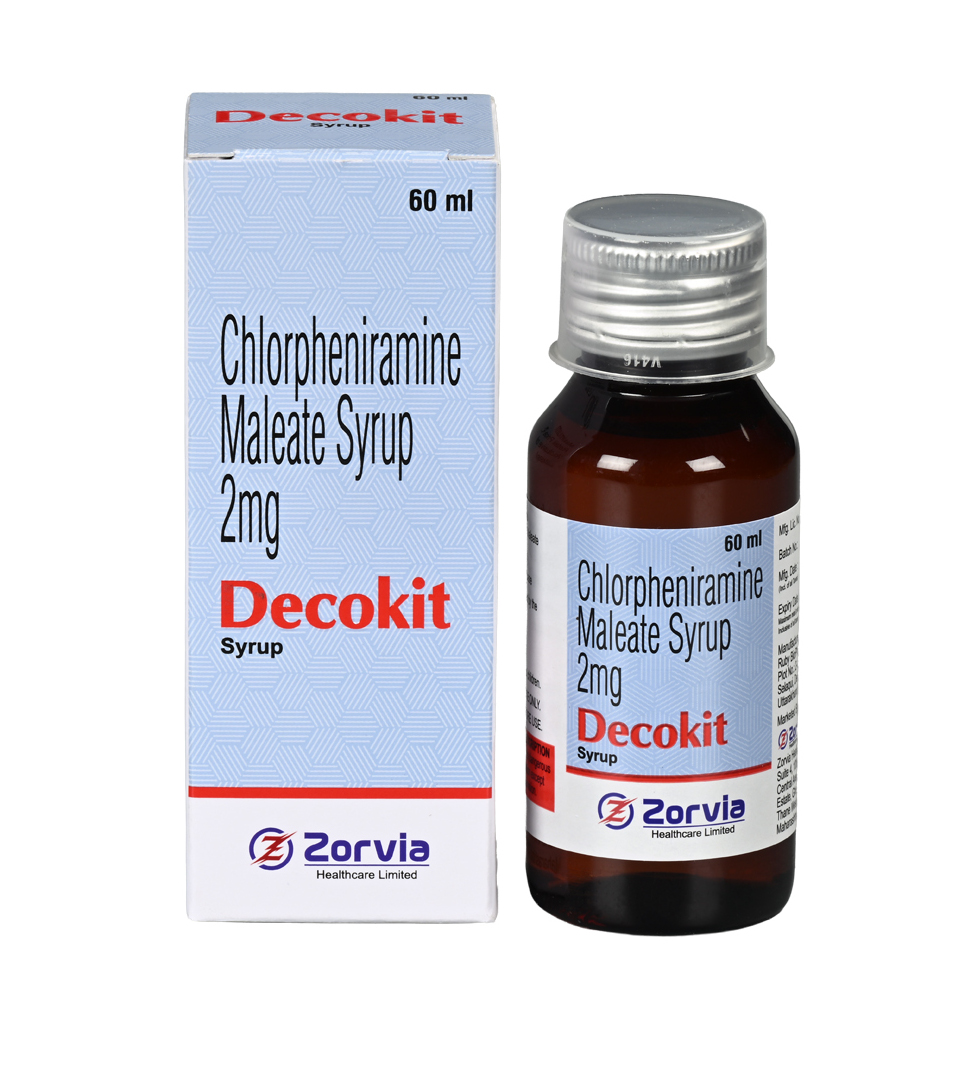
60 ml bottle
8.4 Storage and Handling Instructions
Store below 250C. Protect from light. Keep out of reach of children.
Shake Well Before Use.
9.0 Patient Counselling Information
Overdosage
Patients should be advised not to increase the dose or dosing frequency of Decokit syrup because of the increased risk of somnolence/ sleepiness at higher doses.
Dosing
Patients should be advised to measure Decokit syrup with an accurate milliliter measuring cap provided with bottle. Patients should be informed that a household teaspoon is not an accurate measuring device and could lead to overdosage, especially when half a teaspoon is measured.
Concomitant Use of Alcohol and Other Central Nervous System Depressants
Patients should be advised to avoid the use of alcohol and other central nervous system depressants while taking Decokit syrup because additional reduction in mental alertness may occur.
Activities Requiring Mental Alertness
Patients should be advised to avoid engaging in hazardous tasks that require mental alertness and motor coordination such as operating machinery or driving a motor vehicle as Decokit syrup may produce marked drowsiness.