4.0 Clinical Particulars
4.1 Therapeutic Indications
For the treatment of Chronic obstructive pulmonary disease (bronchial asthma, bronchitis, bronchiectasis) emphysema and mucoviscidoses.
4.2 Posology and Method of Administration
Adults: One tablet twice daily.
4.3 Contraindications
- Known hypersensitivity or allergy to acebrophylline, acetylcysteine, theophylline, ambroxol, or any other xanthine derivatives
- Patients with renal impairment or hepatic dysfunction
- Acute myocardial infarction
- Hypotension, hemodynamic instability, or presence of cardiac arrhythmias
4.4 Special Warnings and Precautions for use
Careful surveillance is recommended for patients with congestive heart failure, chronic alcoholism, hepatic impairment, or viral illnesses.
Caution should be applied in patients with cardiac arrhythmias, additional cardiovascular disorders, hyperthyroidism or hypertension, gastric and duodenal ulceration or seizure disorders. Patients with hepatic and renal impairment should use it cautiously.
Bronchospasm may develop with the use of acetylcysteine particularly in patients with asthma. If bronchospasm occurs, the medicinal product must be stopped immediately.
Caution is recommended in patients with a previous history of peptic ulcer, especially when administered concurrently with other medicinal products known to irritate the mucosal lining of the gastrointestinal tract.
Severe skin reactions such as Stevens-Johnson syndrome and Lyell's syndrome have extremely rarely been reported in temporal association with the use of acetylcysteine. In most cases, at least one additional suspect medicinal product, which was more likely the cause of the mucocutaneous syndrome could be identified. If cutaneous or mucosal changes newly appear, immediate medical consultation should be obtained and the treatment with acetylcysteine should be stopped immediately.
Bronchial secretions may become thinner and increase in volume, particularly at the beginning of the treatment with acetylcysteine. When a patient is unable to expectorate the secretions effectively, postural drainage and bronchoaspiration should be carried out.
4.5 Drug Interactions
Xanthines (acebrophylline) may intensify hypokalaemia resulting from beta2-agonist therapy, steroids, diuretics and hypoxia. Caution is recommended in severe asthma. It is advised that serum potassium levels are monitored in these situations.
The following decrease clearance and a lower dosage may therefore be required to prevent side effects: allopurinol, cimetidine, ciprofloxacin, corticosteroids, diltiazem, erythromycin, frusemide, isoprenaline, oral contraceptives, thiabendazole and verapamil, doxycycline, amoxicillin etc.
To date, the inactivation of antibiotics by acetylcysteine has been observed only in in-vitro tests, where the relevant substances were combined directly with each other. However, if oral antibiotics are necessary, it is recommended that these should be taken two hours before or after Acetylcysteine.
Acetylcysteine should not be given concomitantly with antitussive medicinal products.Acetylcysteine may increase the vasodilatory effects of nitroglycerin. Caution is recommended.
Activated charcoal may reduce the effect of acetylcysteine due to decreased absorption.
4.6 Use in Special Population
Pregnancy
Aeroly-N tablet is not recommended during pregnancy or at the time of labour and delivery.
Lactation
The safety of Aeroly-N tablet has not been established during the lactation period; therefore, the use of acebrophylline is not recommended in breastfeeding mothers.
4.7 Effects on Ability to Drive and Use Machines
No studies on the effect on the ability to drive and use machines have been performed. Aeroly-N tablet is not expected to have any effect on the ability to drive and use machines.
4.8 Undesirable Effects
The commonly reported adverse effects associated with acebrophylline include abdominal discomfort, gastric or abdominal distension, vomiting, abdominal pain, diarrhea, constipation, heartburn, loss of appetite, esophageal bleeding, skin rashes, urticaria, pruritus, drowsiness, dyspnea, leukocytosis, and nasal inflammation. If chills or fever develop, the drug should be discontinued immediately.
Rarely reported adverse reactions include headache, occasional numbness (including numbness of the arm), insomnia, tachycardia, fatigue, hypertension, albuminuria, glycosuria, hypotension, and occasional hyperglycemia.
Nausea and dizziness may occur during treatment. These are reversible and usually resolve upon discontinuation of therapy.
Reporting of Suspected Adverse Reactions
Reporting suspected adverse reactions after authorization of the medicinal product is important. It allows continued monitoring of the benefit/risk balance of the medicinal product. Healthcare professionals are asked to report any suspected adverse reactions via email to: medico@zorvia.com
By reporting side effects, you can help provide more information on the safety of this medicine.
4.9 Overdose
Nausea, vomiting (often severe), epigastric pain and haematemesis. Pancreatitis if abdominal pain persists. Restlessness, hypertonia, exaggerated limb reflexes and convulsions. Tachycardia is common. Symptomatic treatment should be provided.
5.0 Pharmacological Properties
5.1 Mechanism of Action
Acebrophylline
Acebrophylline is a pharmacological compound that exhibits bronchodilatory, mucoregulatory, and anti-inflammatory properties, attributable to its constituent components theophylline-7-acetate and ambroxol. Theophylline-7-acetate, similar to other xanthine derivatives, produces bronchodilation through inhibition of intracellular phosphodiesterase enzymes, resulting in increased intracellular levels of cyclic adenosine monophosphate (cAMP). Elevated cAMP promotes relaxation of bronchial smooth muscle, thereby improving airway patency.
Ambroxol exerts its effect by modifying the gel phase of bronchial secretions, leading to a reduction in mucus viscosity and an increase in the serous component. Additionally, it enhances mucociliary clearance by stimulating ciliary motility, facilitating the effective removal of respiratory secretions.
Acebrophylline further demonstrates anti-inflammatory activity by inhibiting phospholipase A₂ and phosphatidylcholine, resulting in reduced synthesis of potent pro-inflammatory mediators such as leukotrienes and tumor necrosis factor (TNF). By suppressing the production and release of these inflammatory substances, acebrophylline decreases airway inflammation, a critical contributor to bronchial obstruction, particularly in chronic respiratory conditions.
Acetylcysteine
Acetylcysteine functions primarily as a mucolytic agent. Its mucolytic activity is mediated through a reduction in the viscosity of bronchial mucus, achieved by cleaving disulfide bonds that link mucous macromolecules, leading to depolymerization of mucus.
In addition to its mucolytic properties, acetylcysteine serves as a precursor of glutathione, an essential endogenous antioxidant. As a derivative of the naturally occurring amino acid cysteine, acetylcysteine provides a substrate for glutathione synthesis within the body. Beyond restoring depleted glutathione levels, acetylcysteine can conjugate with various toxic compounds, thereby contributing to its detoxifying and cytoprotective effects.
5.2 Pharmacodynamic Properties
Acebrophylline + N-Acetylcysteine fixed dose combination
When administered concomitantly, this combination exerts synergistic therapeutic effects in obstructive and inflammatory airway disorders.
- Acebrophylline produces bronchodilation and exerts mucoregulatory activity by reducing mucus hypersecretion and improving airway patency.
- N-acetylcysteine acts as a mucolytic agent, decreasing mucus viscosity by cleaving disulfide bonds in mucoproteins and thereby facilitating secretion clearance.
Combined Therapeutic Effects:
- Improve bronchial airflow
- Enhance mucociliary transport
- Attenuate airway inflammation
- Optimize pulmonary function and clinical symptom control
5.3 Pharmacokinetic Properties
In healthy volunteers administered a single 200 mg oral dose of acebrophylline, the two active components—ambroxol and theophylline-7-acetic acid—are released in the stomach and subsequently absorbed from the intestine. Peak plasma concentrations are achieved approximately 2 hours for ambroxol and 1 hour for theophylline-7-acetic acid following administration. The plasma elimination half-life ranges from 4 to 9 hours after oral dosing. Acebrophylline undergoes hepatic metabolism and is primarily eliminated via the kidneys.
Acetylcysteine is rapidly absorbed following oral administration and is widely distributed throughout the body. The highest tissue concentrations are observed in the liver, kidneys, and lungs. In the liver, acetylcysteine is predominantly deacetylated to cysteine, which subsequently enters amino acid metabolic pathways. Additionally, acetylcysteine forms reversible disulfide bonds with amino acids and proteins containing free sulfhydryl groups. At higher doses, a substantial proportion is converted into inorganic sulfate, which is then excreted renally.
6.0 Nonclinical Properties
6.1 Animal Toxicology or Pharmacology
Not available
7.0 Description
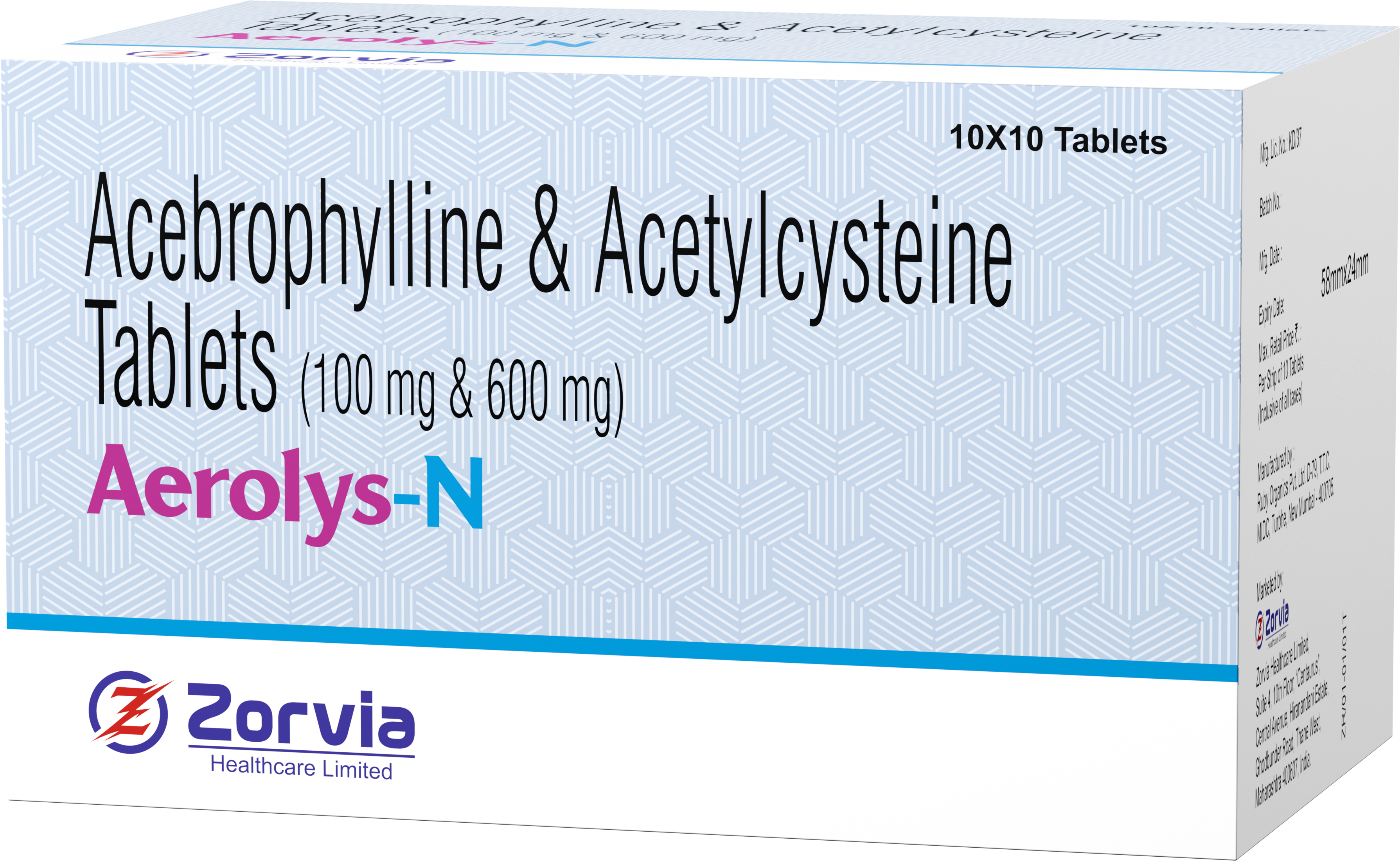
Aerolys-N tablets are a combination of acebrophylline and n-acetylcysteine.
Acebrophylline
Acebrophylline (Ambroxol theophylline-7-acetate) is the salt obtained by reaction of equimolar amounts of ambroxol, a drug showing mucolytic and expectorant properties, and theophylline-7-acetic acid, a xanthine derivative with specific bronchodilator activity.
Molecular formula: C22H28Br2N6O5
Molecular weight: 616.3
Chemical Name: (1s,4s)-4-(((2-amino-3,5-dibromophenyl)methyl)amino)cyclohexan-1-ol; 2-(1,3-dimethyl-2,6-dioxo-2,3,6,7-tetrahydro-1H-purin-7-yl)acetic acid
N-acetylcysteine
Acetylcysteine is a synthetic N-acetyl derivative and prodrug of the endogenous amino acid L-cysteine, a precursor of the antioxidant glutathione (GSH), with mucolytic, antioxidant, and potential cytoprotective, cancer-preventive, and anti-inflammatory activities.
Molecular Formula: C5H9NO3S
Molecular Weight: 163.20 g/mol
8 Pharmaceutical Particulars
8.1 Incompatibilities
None.
8.2 Shelf-Life
Refer on pack.
8.3 Packaging Information
10X10 Tablets
8.4 Storage and Handling Instructions
Store below 300C. Protect from light and moisture. Keep out of reach of children.
9.0 Patient Counselling Information
Purpose of Medicine
- This medicine helps thin and loosen thick mucus, making it easier to cough out.
- It also helps open the airways, improving breathing in conditions like chronic bronchitis, COPD, asthma, or chest congestion.
How to Take
- Take the tablet exactly as prescribed by your doctor.
- Swallow whole with a glass of water; do not crush or chew.
- It is usually taken after food to reduce stomach upset.
- Take it at the same time each day for best results.
What to Expect
- You may notice increased coughing initially—this is normal as mucus is being cleared.
- Breathing should gradually become easier with regular use.
Possible Side Effects
- Common: nausea, vomiting, stomach discomfort, headache, or dizziness.
- Rare: palpitations, rash, or breathing discomfort.
- Inform your doctor if side effects are severe or persistent.
Precautions
- Tell your doctor if you have stomach ulcers, heart problems, liver or kidney disease, or asthma sensitivity.
- Avoid smoking, as it reduces the effectiveness of the medicine.
- Limit or avoid alcohol, as it may worsen stomach irritation.
Drug Interactions
Inform your doctor about all other medicines you are taking, especially:
- Antibiotics
- Theophylline or other bronchodilators
- Cough suppressants (do not use unless advised)
Missed Dose
- If you miss a dose, take it as soon as you remember.
- If it’s almost time for the next dose, skip the missed dose—do not double the dose.
When to Seek Medical Help
- If you experience chest pain, severe shortness of breath, allergic reactions (swelling, rash, itching), or persistent vomiting.
10.0 Date of Revision
20th March 2026